How Many State Parks in the Florida Keys?
There are 9 official State Parks in the Florida Keys, one State Trail, and even an underwater preserve. If you like to boat, kayak, snorkel, dive, bike, hike, or camp, you can find a State Park to scratch your itch. Speaking of itch, be sure to bring your insect repellent with you to all these state parks as the mosquitos and no-see-ums can get bad.
Some State Parks in the Florida Keys are only open from sunrise to sunset. But there are several that are bigger and have activities that will keep you busy for up to a week. You can bring your dog to most parks, but not on the beaches.
Dagny Johnson Key Largo Hammock Botanical State Park One of Several Nature Trail State Parks in the Florida Keys
Big name, small park. At one time this area was slated to become a condo development, but now is the United States largest tract of West Indian Hardwood Hammock. Thanks to the efforts of Dagny Johnson, a local environmentalist, she was able to convince the state of Florida to purchase the land that was going to be used for the condo project.
Things to do at Dagny Johnson State Park
Dagny Johnson (the park) is actually split into two sections. The main park is on County Road 905, a half mile north of The Overseas Highway. There is another section seven miles north, closer to Card Sound Road that has 7 miles of backcountry trails. If you want to hike the backcountry trails you need to stop at John Pennekamp State Park and pick up a backcountry permit.
The main park has a 1–2-mile, depending on if you do the half or full loop, self-guided nature trail. The trail is partly paved, partly gravel, and partly coral rock substrate. Along the trail is signage with information about some of the 84 protected species of plants and animals that are in the park. Bikers, hikers, and dogs are allowed on the trail, as long as they are well behaved at all times. If you’re biking, the trail is best suited to mountain bikes, but there are sections that you can take thin tired bikes and be alright.
Wildlife viewing in the park features migratory birds in the spring and fall, along with tropical birds such as the mangrove cuckoo and the black-whiskered vireo. There is a butterfly garden where you can get a glimpse of the Schaus’ swallowtail and the silver-banded hairstreak.
Fees and Hours
Bring a lunch and enjoy an afternoon at the park on your way in or out of the Florida Keys. Dagny Johnson State Park is open from sunrise to sunset. Cost is $2.50 per person, pay at the drop box.
John Pennekamp Coral Reef State Park
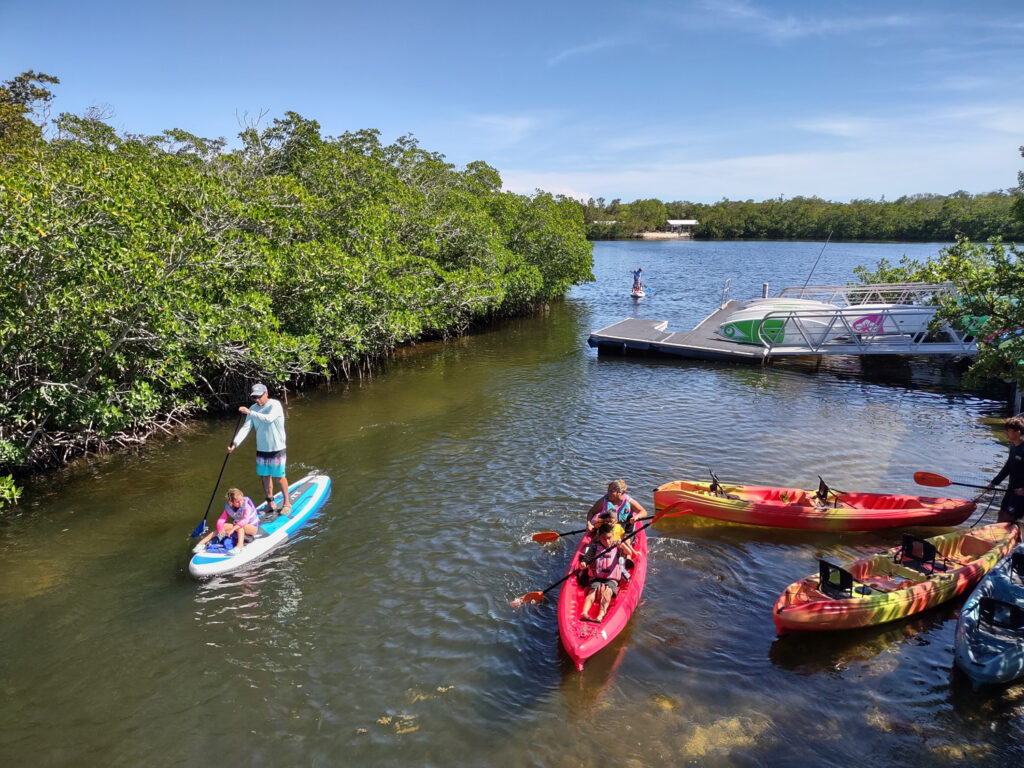
John Pennekamp State Park is mostly underwater and was the country’s first undersea park. Even though dry land is a small percentage of the park, there are still a lot of things to do while you’re there. They also have boat and kayak rentals and offer a number of excursions. If you’re a camper, they have a campground for both RVs and tents.
Things to do at John Pennekamp Coral Reef State Park
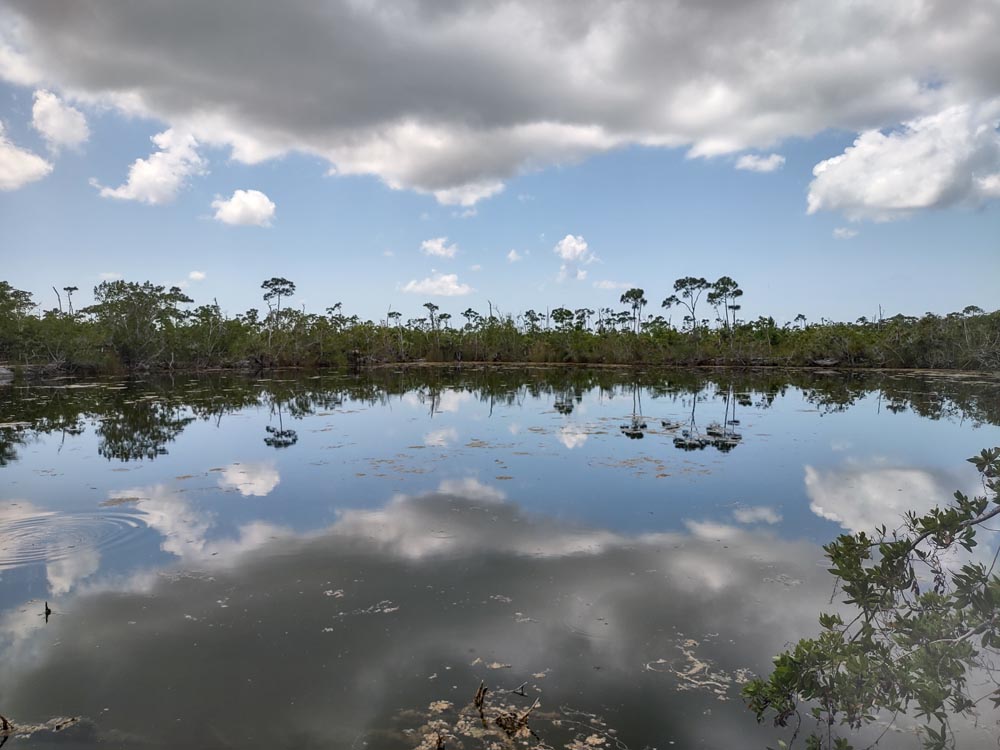
The above water part of the park has two beaches that you can snorkel off, there’s even a 17th century cannon underwater that you can snorkel to. There are some short hiking trails through the hardwood hammock where you can learn about the trees that make up the Florida Keys. If you want to explore the water, there are mangrove trails that offer some of the best Florida Keys kayaking. You can kayak or SUP, through mangroves and open water, often sighted are sharks, stingrays, and other marine life. If a kayak doesn’t fit in your car with all your other gear, don’t worry, they rent kayaks, so you don’t have to bring your own.
There is a great visitor center where you can virtually explore 6 ships that wrecked near Key Largo. They also have a 30,000-gallon saltwater aquarium. It’s filled with coral and the reef dwellers that make up the reefs around the Florida Keys.
There’s a 2 1/2-hour glass bottom boat tour that goes to various parts of the reef that allows you to see the reef up close without ever having to get wet. If you’re more hands on, you can also do one of their scuba diving or snorkeling excursions.
Fees and Hours
John Pennekamp Coral Reef State Park is open 365 Days a year. The gatehouse hours are 8 a.m. until sunset. The entrance fee is $8.00 per vehicle, plus .50 per person.
Windley Key Fossil Reef Geological State Park
If you are interested in the geology of the Florida Keys, then you should take a couple of hours and explore Windley Key.
Things to do at Windley Key Fossil Reef Geological State Park
The limestone in the Keys is composed of fossilized coral over 125,000 years old. When Henry Flagler was building the Overseas Railroad, they needed limestone for fill. They pulled out millions of cubic yards of limestone from Windley Key. After the railway was completed, the quarry continued to produce “Keystone” for building fascia.
Windley Key State Park is a great place to spend an afternoon when you’re in Islamorada. You can run or hike their 1 1/2 miles of nature trails on some of the best Florida Keys hiking trails. The trails wind through a hardwood hammock where many of the different species of trees are marked. The trails also go through the quarries that the Keystone was mined, and the walls are up to 8 foot high. Leftover equipment that was used to cut and transport the material is scattered about the site. Birding is popular with visitors, and there’s a visitor center where you can learn about the history of the land and view the extraction methods that were used to remove the limestone.
Ranger led tours are available at certain times of the year, check with the visitor center. Pick up some sandwiches and enjoy a quiet lunch at one of their picnic tables.
Fees and Hours
Cost is $2.50 per person, pay at the drop box or ranger station. Windley Key is open 8 a.m. to 5 p.m. Thursday through Monday.
Lignumvitae Key Botanical State Park
The only way to get to Lignumvitae is by boat, so grab your kayak and head over for a couple of hours and explore the island.
The Key, and the State Park are named after the Lignumvitae tree that is found throughout the island. The slow growing tree is known for its healing properties and dense wood. Historically it was used to treat arthritis, colds, and coughs, among other ailments. It is now a protected species and thrives on the Key.
In 1919 a Miami chemist with a lot of money bought the key and had a caretaker’s home built on it, which now serves as a visitor center. The home has been preserved and offers a glimpse into the past. Ranger led tours are available from December to April. During offseason, self-guided tour brochures are available to point out interesting features of the house and yard.
Things to do at Lignumvitae Key Botanical State Park
There is a short nature trail on the island that features butterflies, shorebirds, and 65 species of trees and shrubs. Fishing (with a valid license), snorkeling, and swimming are allowed around the island, just stay 100 feet away from the dock. Snorkelers are required to have a diver down flag.
If you don’t have a kayak or boat to get there, you can find a list of rental operators here.
Fees and Hours
Cost is $2.50 per person, pay at the drop box. If you’re there during the tour season and want to do a tour, it’s an extra $2.00 per person. Hours for the park are 8 a.m. to 5 p.m. Thursday through Monday.
Indian Key the Ghost Town of State Parks in the Florida Keys
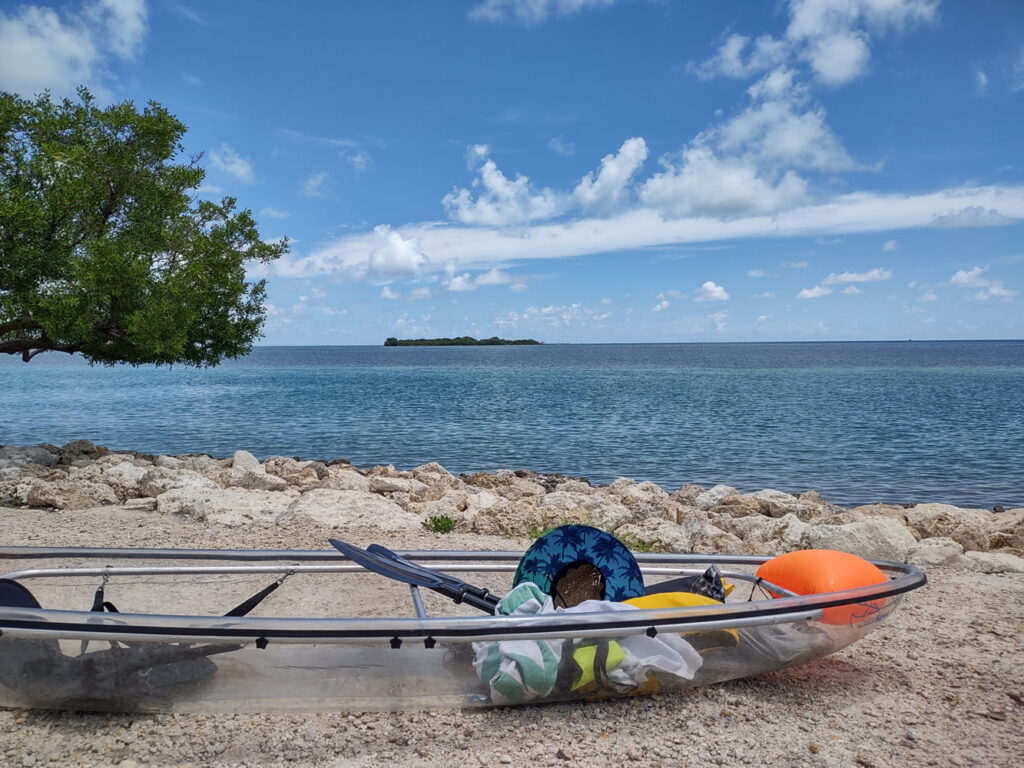
Indian Key is another one of the State Parks in the Florida Keys that you can only get to by boat.
What was once a bustling wrecker community in the 1830s, came to an end after the Indian Key Massacre during the Seminole Wars. Thirteen residents were killed and most of the buildings were burned to the ground. Indian Key was briefly a naval hospital in the mid-1800s and is now a ghost town with streets, cisterns and foundations of old buildings.
Things to do at Indian Key State Park
Now you can walk the streets while you listen to a virtual tour of what the town was like in the 1830s. Just download the Florida Stories app and learn about the history of the residents, the town layout, and the infamous raid by the Seminole Indians.
Snorkeling in the clear waters off of the southeast side of the island reveals a variety of coral and sea life.
Kayak rentals are available from Robbie’s Marina, or Backcountry Cowboys.
Fees and Hours
Cost is $2.50 per person, pay at the drop box. Indian Key State Park is open 365 days a year from 8 a.m. to sunset.
San Pedro Underwater Archeological State Park
Add another contender to the long name contest for State Parks in the Florida Keys. What was once a 1700s Dutch ship weighing 287 tons is now a large pile of ballast stones from the 1700s.
The San Pedro was part of a Spanish flotilla that was about a 1 mile south of Indian Key when they got struck by a hurricane in July of 1733 and sank. She was discovered and salvaged in 1960. The ballast stones that cover the 90 x 30-foot area are original, but there are several replica 1700s cannons, an anchor, and a plaque that have been placed around the site.
Things to do in San Pedro Underwater Archeological State Park
Five mooring balls are available to tie up to as you explore the remains. The San Pedro is under 18 feet of water, so while you can snorkel the area, diving is a better option.
If you’d like to visit, the GPS coordinates are 24 degrees 51.802’N, 80 degrees 40.795’W.
Fees and Hours
There is no fee to snorkel or dive the San Pedro wreck. Hours are 8 a.m. to Sunset.
Long Key State Park in the Florida Keys
What was once a luxury fishing resort for the rich and famous, is now a state park for hikers, birders, and campers. Fishing is still popular here; you just don’t have to be on the who’s-who list to get access. Long Key State Park is located in between Islamorada and Marathon.
Things to do in Long Key State Park: The most Primitive Camping in the State Parks of the Florida Keys
Kayaks are available for rent at the ranger station and it’s a great paddle along the shoreline through shallow waters. While you’re out there, keep an eye out for marine life and other wildlife in the mangroves. You can hike the Golden Orb Nature Trail on the Atlantic side, or the Layton Trail on the Florida Bay side. Bring your snorkel gear and check out some fantastic underwater views.
Due to the one-two punch of hurricanes Irma and Ian, there are only three walk-in primitive campsites in Long Key State Park. What they lack in amenities, they make up for in location. Tent sites include a picnic table, grill, and firepit, but the real perk of this campground is waking up right on the shore of the Atlantic Ocean. Cold showers and restrooms are onsite for campers.
Fees and Hours
Admission is $4.50 for one person, $6.00 for two, plus .50 for each additional person. Hours are 8 a.m. to sunset 365 days a year.
Curry Hammock State Park
Curry Hammock State Park is halfway between Key Largo and Key West and is the largest undeveloped area between Key Largo and Big Pine Key.
Things to do in Curry Hammock State Park
Popular with kayakers and wind surfers. Curry Hammock also has a nature trail, snorkeling areas, and is a great place to fish, provided you have the correct license. Marine wildlife viewing from the shore includes sharks, dolphins, stingrays, and manatees. Kayaks, SUPs, and bikes are available to rent at the ranger station.
Stargazing is popular at Curry Hammock due to the lack of light pollution. Imagine viewing the skies and seeing infinite stars. If you’re camping at one of the 28 campsites, be sure to look up at night for a spectacular show.
Fees and Hours
Admission is $4.50 for one person, $6.00 for two, plus .50 for each additional person. Hours are 8 a.m. to sunset 365 days a year.
Crane Point Hammock isn’t a State Park, but it’s definitely a place that you should visit while you’re in Marathon.
Bahia Honda State Park Boasts the Best Beaches of the State Parks in the Florida Keys
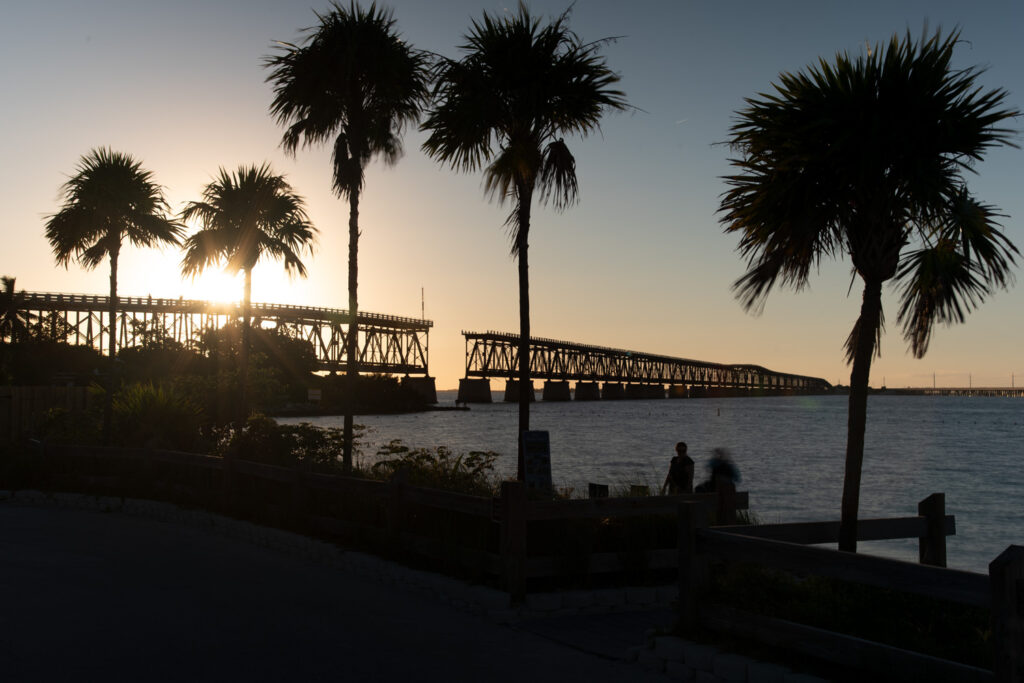
Bahia Honda is one of the more popular state parks in the Florida Keys. It’s located just on the south side of the Seven Mile Bridge on its namesake key.
Things to do in Bahia Honda State Park: The Most Iconic Bridge in the State Parks of the Florida Keys
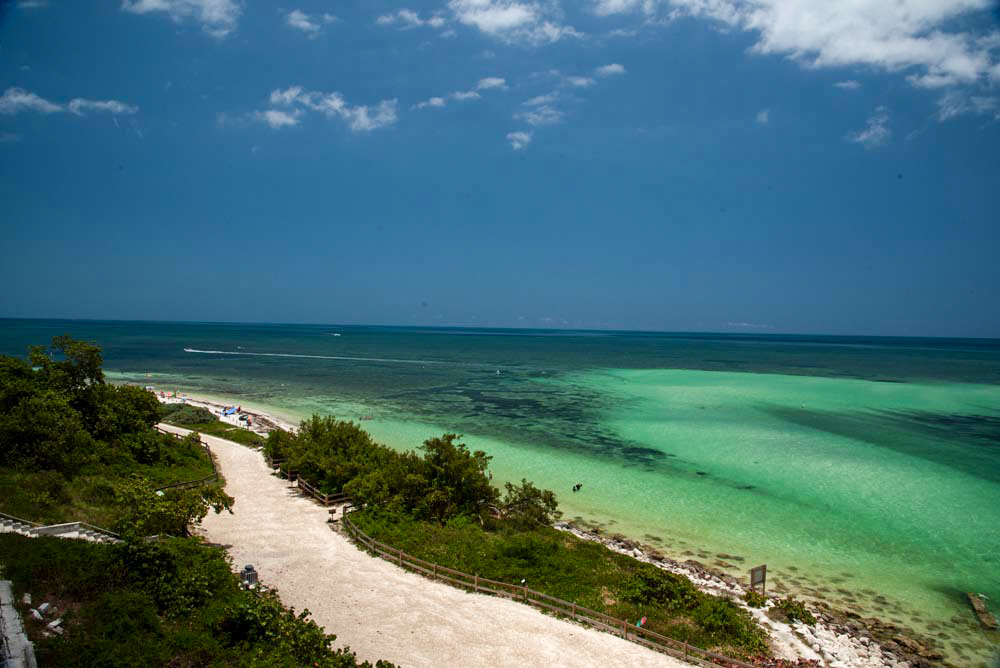
Three beaches, three campgrounds, and one of the most photographed bridges in the Florida Keys all add to the popularity of this park. Snorkeling in the clear water on the Atlantic side reveals multitudes of conch, yellowtail snapper, grunts, stingrays, and other marine life.
Snorkel gear and kayaks can be rented at the concession shop of Bahia Honda State Park. You can book a snorkel tour to Looe Key right before you pick up your lunch at the snack bar. If you’re arriving by boat, you can rent a wet slip for the night in their protected lagoon.
Fees and Hours
Admission is $8.00 per vehicle. Hours are 8 a.m. to sunset 365 days a year.
Fort Zachary Taylor Historic State Park
Located along the southwest corner of Key West, Fort Taylor offers a historical look at a pre-civil war fort. Also in the park is a popular beach where you can swim, snorkel, picnic, fish, and even kayak, if you bring your own.
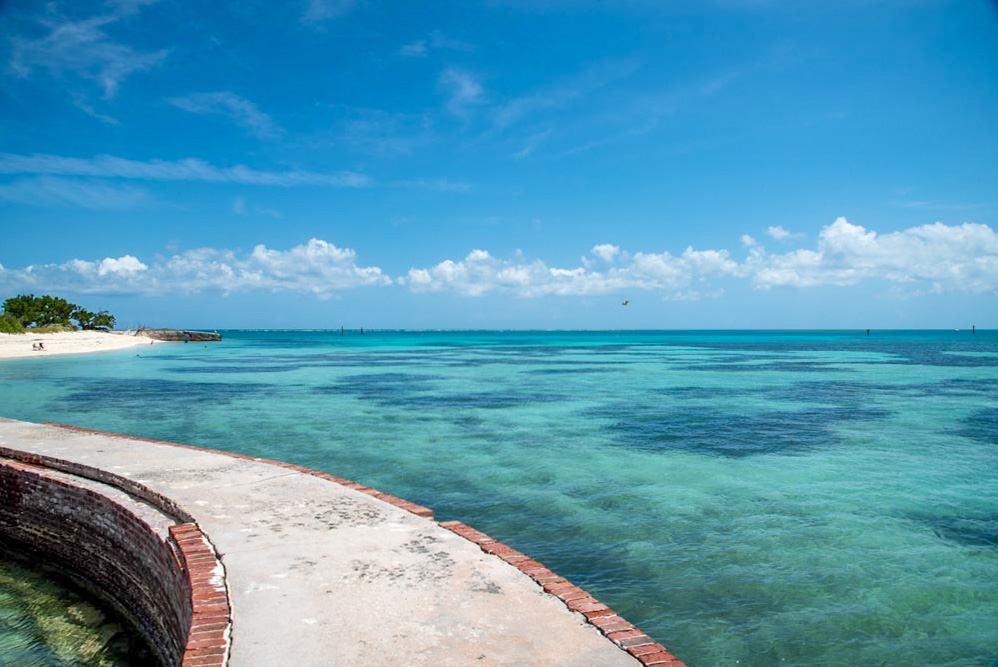
Fort Zachary Taylor construction started in 1845 and was an active-duty fort until 1947. Now you can roam the red bricked National Historic Landmark fort and observe the largest cache of civil war era cannons. If you’re there on the third weekend of the month, local historians re-enact historic exhibitions.
Things to do at Fort Zachary Taylor State Park: The Southernmost of the State Parks in the Florida Keys
Outside of the Fort, the park offers nature trails that you can hike and bike on. If you want to enjoy the sun and surf, there’s a great beach for relaxing. The beach has grills, picnic tables, restrooms, and outdoor showers. Snorkeling is a popular activity along with swimming in the shallow waters. There’s a concession stand that will rent snorkel gear and beach chairs. Beach shoes are recommended if you plan on going in the water due to the rocky bottom.
Fees and Hours
Admission is $8.00 per vehicle. Hours are 8 a.m. to sunset 365 days a year but the fort closes at 5 p.m.
Florida Keys Overseas Heritage Trail
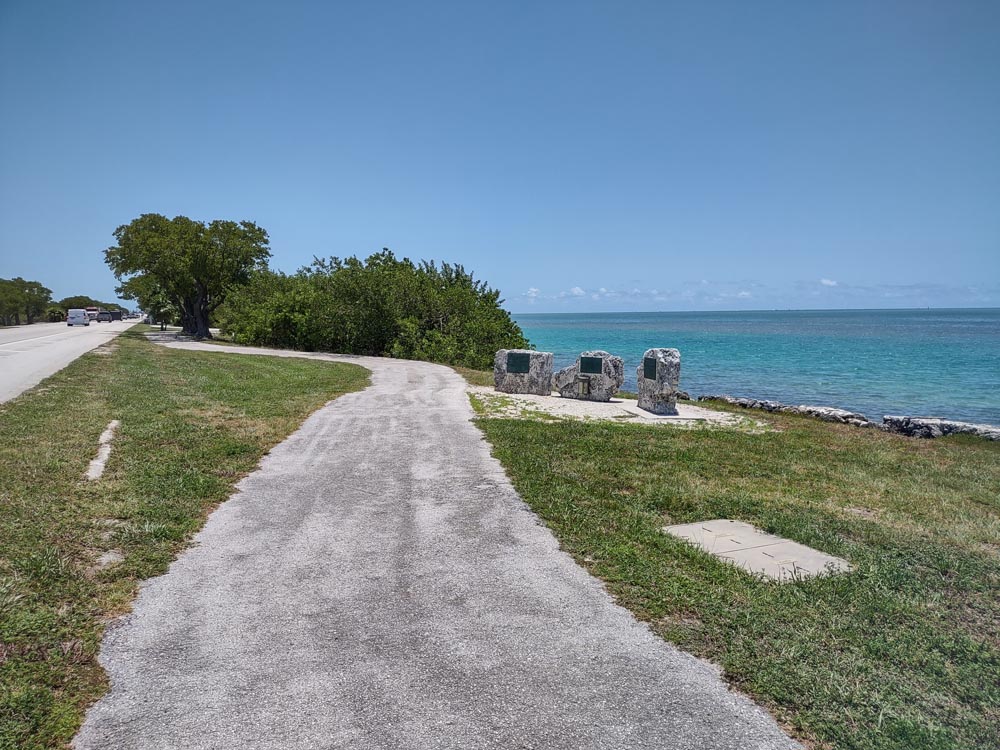
If you’re someone who thinks biking all the way from Key Largo to Key West sounds like a dream, well, you’re almost in luck. It’s a 106-mile corridor, there’s 90 miles of trail, guess what’s part of the 16 miles not paved? That’s right, the seven-mile bridge. If you’re feeling lucky and want to cross on the shoulder, have fun.
The trail from Key Largo to Marathon is mostly complete, while the lower Keys is hit and miss in places. But there are 23 historic Flagler era bridges from the Overseas Railroad that are incorporated into the trail. When you’re on the path you’ll cross through mangroves, fishing bridges, and even a couple of wildlife refuges. So, walk, bike, skate, run and sightsee your way through this special feature of State Parks in the Florida Keys.

Subscribe To Our Newsletter
Monthly events, festivals, and tournaments straight to your inbox!
FAQs
The most popular state parks in the Florida Keys are Bahia Honda State Park, John Pennekamp Coral Reef State Park, and Fort Zachary Taylor Historic State Park. These parks offer the best mix of beaches, snorkeling, kayaking, and family‑friendly activities.
John Pennekamp and Bahia Honda offer the clearest water and easiest access to reefs. Pennekamp features coral formations and marine life, while Bahia Honda has shallow, calm water perfect for beginners.
Yes — Indian Key Historic State Park and Lignumvitae Key Botanical State Park can only be reached by boat or kayak. These islands offer quiet trails, historic ruins, and untouched nature.
You can camp at Bahia Honda, Curry Hammock, Long Key, and John Pennekamp. These campgrounds offer waterfront sites, restrooms, and access to beaches, trails, and kayaking.
There are 9 official Florida Keys state parks, plus the Florida Keys Overseas Heritage Trail and the San Pedro Underwater Archaeological Preserve, which are also managed as state park sites.
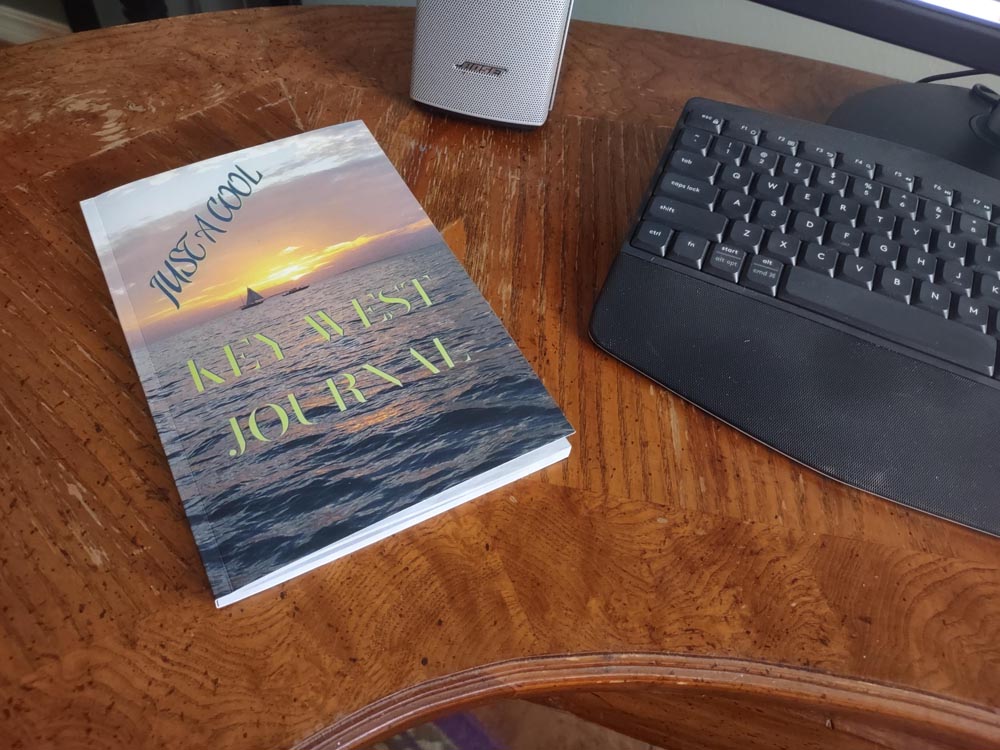
Explore. Discover. Remember. Your Journey Starts Here
Whether you’re snorkeling at Pennekamp, hiking Indian Key, or watching the sunset at Bahia Honda, your Florida Keys adventures deserve a place to be remembered. Grab a travel journal and start documenting every stop along the Overseas Highway.
Related Posts
Three Days in Key West: The Perfect Itinerary
Best Beaches in the Florida Keys (Local Favorites and Hidden Spots)